What’s Stare Decisis? Unlocking Legal Precedent’s Power

The doctrine of stare decisis is Latin for “to stand by things decided.” It is a fundamental principle in common law legal systems. This includes India. It mandates that courts adhere to previous judicial decisions, or precedents, when resolving similar cases. This doctrine promotes consistency, predictability, and fairness in the application of law.

Origin

The origins of stare decisis can be traced back to medieval England. During this period, judges often relied on custom and tradition to resolve disputes. However, as the legal system evolved, judges began to recognize the importance of consistency. They understood the need for predictability in the application of law. They started to cite previous decisions as authority for their rulings, laying the foundation for the doctrine of stare decisis.

Colonial Influence and Indian Adoption

The British colonial era played a significant role in the spread of common law principles. These principles reached various parts of the world, including India. As the British colonized India, they introduced their legal system, which was based on English common law. This included the doctrine of stare decisis.

The Indian Constitution, which came into force in 1950, formally adopted the doctrine of stare decisis. Article 141 of the Constitution states that “the law declared by the Supreme Court shall be binding.” It applies to all courts within the territory of India. This ensures Supreme Court’s decisions are binding on all lower courts. This maintains uniformity in law interpretation and application.  

The core rationale behind stare decisis is to ensure:

  1. Consistency: Similar cases should be treated similarly, preventing arbitrary or discriminatory decisions.
  2. Predictability: Individuals and businesses can plan their actions with confidence, knowing the likely legal consequences.
  3. Efficiency: Courts can rely on established legal principles, reducing the need for extensive re-litigation.
  4. Public Trust: Adherence to precedent strengthens public confidence in the judiciary.

Precedent

A precedent is a judicial decision. It serves as an authority for resolving subsequent legal cases with similar facts and issues. In simpler terms, it is a past ruling used as a guide for future decisions. Precedents form the foundation of common law legal systems, including India. They play a crucial role in ensuring consistency. They also ensure predictability and fairness in the application of law. They are categorized based on their binding force and persuasive authority:

  1. Binding Precedent: Decisions of higher courts are binding on lower courts within the same jurisdiction. For example, in India, Supreme Court decisions are binding on all High Courts and lower courts.
  2. Persuasive Precedent: Decisions from other jurisdictions or lower courts can be persuasive but are not strictly binding. Courts may consider these decisions to support their arguments or to gain insights into legal issues.

The Components of a Precedent

A precedent comprises several key elements:

  1. Ratio Decidendi: The core legal principle or reasoning underlying the decision.7 It forms the binding part of the precedent.
  2. Obiter Dictum: Non-essential remarks or observations made by the judge, which are not binding but may be persuasive.
  3. Per Incuriam: Decisions made in ignorance of relevant laws or precedents, which are not binding.
  4. Sub Silentio: Decisions made without explicit discussion of a particular legal issue, which lack binding authority.

Stare Decisis in India

Article 141 of the Indian Constitution enshrines the doctrine of stare decisis. This makes Supreme Court judgments binding on all courts within India. This ensures uniformity in the interpretation and application of law across the country.

Exceptions to Stare Decisis

While stare decisis is a powerful tool, it is not absolute. Courts may depart from precedent in certain circumstances:

  1. Per Incuriam Decisions: Decisions made in ignorance of relevant laws or precedents.
  2. Sub Silentio Decisions: Decisions made without explicit reasoning.
  3. Obiter Dictum: Non-binding remarks or observations.
  4. Legislative Overrides: Parliament can enact laws that supersede judicial decisions.
  5. Erroneous Precedents: Courts may overrule incorrect or outdated precedents.

The Doctrine of Prospective Overruling

This doctrine allows courts to overrule a precedent without affecting past decisions based on it. It balances the need for legal development with the principle of certainty.

Landmark Cases on Stare Decisis in India

  1. Mohd. Ahmed Khan v. Shah Bano Begum (1985): This case reaffirmed that Supreme Court decisions are binding. This remains true even in sensitive areas like personal law.
  2. State of U.P. v. Synthesis & Chemicals Ltd. (1991): The Court clarified that not all Supreme Court decisions are binding.
  3. Suganthi Suresh Kumar v. Jagadeesan (2002): High Courts cannot overrule Supreme Court decisions.
  4. Pandurang Kalu Patil v. State of Maharashtra (2002): High Court decisions are binding on subordinate courts.
  5. Paramjit Kaur v. State of Punjab (2021): The Supreme Court’s authority to evolve legal principles was emphasized.

The Importance of Stare Decisis

Stare decisis plays a crucial role in maintaining the stability and predictability of the legal system.It ensures that similar cases are treated similarly, reducing uncertainty and promoting justice.14 By following precedent, courts can efficiently resolve disputes and avoid unnecessary litigation.

However, it is essential to recognize that the doctrine is not rigid. Courts must be willing to depart from precedent when necessary, such as when a precedent is clearly erroneous or outdated. This flexibility allows the law to evolve and adapt to changing societal needs.

Conclusion

In conclusion, the doctrine of stare decisis serves as a cornerstone of the Indian legal system. By adhering to precedent, courts ensure consistency, predictability, and efficiency in the application of law. This promotes public trust in the judiciary and facilitates the smooth functioning of society.

However, stare decisis is not without its limitations. The doctrine must be balanced with the need for legal evolution. Courts must have the flexibility to depart from precedent when it is demonstrably erroneous or outdated. The exceptions and doctrines like prospective overruling allow for this necessary flexibility.

Looking ahead, the power of precedent will be crucial. It will maintain a stable and predictable legal system in India. However, courts must remain vigilant in ensuring that stare decisis does not stifle legal progress. Through careful analysis, the doctrine can uphold the rule of law. A willingness to adapt when necessary also ensures justice for all.
Implementing Gender-Neutral Laws in India: Need for Reform

Introduction

The Indian judicial system, once a beacon of justice, is grappling with a growing concern: the pervasive bias in its laws, particularly those affecting gender relations. While laws enacted to protect women are commendable and have undoubtedly brought attention to issues of domestic violence and harassment, their misuse has led to a surge in false accusations, family breakdowns, and the alienation of innocent men. This troubling trend not only tarnishes the integrity of the legal system but also undermines the very essence of justice, as it creates an environment where genuine victims may be overlooked or disbelieved. The time has come to recognize that crime is not gender-specific and that justice must be dispensed impartially, irrespective of the gender of the accused or the victim. In striving for true equity, the focus should shift towards a judicial process that upholds the principles of fairness and objectivity, ensuring that all individuals are treated with respect and their cases assessed based on merit rather than preconceived notions of gender.

The current legal framework, heavily tilted in favor of women, has created a system where men are often presumed guilty until proven innocent. This bias is particularly evident in family law, where fathers are routinely denied custody of their children, even in cases where the mother is unfit or abusive. The misuse of domestic violence laws has become a tool for extortion, with false accusations being leveled to gain financial advantage or to settle personal scores.

Furthermore, the reluctance of the judiciary to scrutinize such cases has emboldened unscrupulous individuals to exploit the system. The fear of social stigma and the pressure to uphold the image of women as perpetual victims have led to a culture of impunity, where the rights of men are routinely disregarded.  

The Urgent Need for Gender-Neutral Laws

To address the growing issue of gender bias in the legal system, it is imperative to implement gender-neutral laws that ensure justice for all. Such laws would not only protect women from genuine harm but also safeguard men from false accusations and unjust treatment.

Key Reforms:

  1. Stricter Scrutiny of Accusations: The judiciary must adopt a more rigorous approach to investigating allegations of domestic violence and other crimes, ensuring that false accusations are not rewarded.
  2. Equal Rights for Men and Women in Family Law: Family laws should be amended to ensure that both parents have equal rights to custody and visitation of their children.
  3. Protection for False Accusers: Laws should be enacted to penalize individuals who make false accusations, deterring such behavior and protecting the reputation of the accused.  
  4. Public Awareness Campaigns: Public awareness campaigns should be launched to educate people about the dangers of false accusations and the importance of fair and impartial justice.

The Symbolism of the New Lady Justice Statue

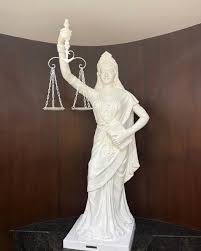
The recent replacement of the traditional Lady Justice statue at the Supreme Court with a new one symbolizes a significant shift in the judiciary’s approach to justice. The new statue, devoid of the blindfold and wielding the Constitution instead of a sword, signifies a departure from the notion of blind justice and a recognition that the law must be applied with discernment and wisdom.  

The removal of the blindfold underscores the importance of the judiciary’s ability to see through falsehood and to ensure that justice is based on evidence, not prejudice. The replacement of the sword with the Constitution emphasizes the supremacy of the law and the judiciary’s commitment to upholding constitutional values.  

The Impact of Gender-Neutral Laws on Society

The implementation of gender-neutral laws would have a profound impact on Indian society. It would:

  1. Promote Gender Equality: By ensuring that both men and women are treated fairly under the law, gender-neutral laws would promote a more equitable society.
  2. Strengthen Family Bonds: By preventing the unnecessary alienation of parents from their children, these laws would help to strengthen family bonds and promote the well-being of children.
  3. Protect the Innocent: By deterring false accusations and ensuring that the innocent are not punished, gender-neutral laws would protect the rights of individuals and uphold the principles of justice.  
  4. Restore Public Faith in the Judiciary: By demonstrating a commitment to fairness and impartiality, the judiciary can regain the trust of the public and strengthen its role as a guardian of justice.  

Conclusion

The time has come for India to extricate itself from the confines of gender bias and to adopt a legal system that is fundamentally just and equitable. By instituting gender-neutral laws and reforming the judiciary, India has the potential to forge a society wherein all individuals, irrespective of gender, are afforded the opportunity to live with dignity and justice. This transformation transcends mere legal necessity; it represents a moral imperative that epitomizes the principles of equality and respect for all citizens. Engaging communities in this crucial dialogue is essential, as it ensures a comprehensive understanding of the importance of identifying and dismantling systemic biases. It is thus imperative to redefine justice, not as an abstract ideal, but as a discerning force that acknowledges truth and acts accordingly, thereby empowering individuals to champion their own rights and adding to the collective voice advocating for a more equitable society. Through active engagement and sustained commitment, society can pave the way for a future in which justice is administered impartially, fostering harmony and understanding among diverse demographics.

The statue of Lady Justice, an emblem of the legal system, is positioned prominently. With her eyes unclouded, she grasps a set of scales in one hand, representing the critical assessment of evidence to guarantee impartial adjudication. In her other hand, she holds the Constitution, denoting the preeminent law of the land and the judiciary’s dedication to upholding its tenets. This compelling imagery signifies the judiciary’s function in interpreting the law, administering justice, and protecting the rights of all citizens.

The Rise of a Lawyer: Confronting Doubt and Fear

The law, a labyrinth, twisting, turning light, Demands the mind, both day and night.
Doubt creeps in, a chilling, icy breath,
“Can I succeed? Can / conquer death?”
Of justice lost, of rights denied,
The budding lawyer, with spirit inside,
Confronts the fear, the looming dread,
And plants the seed of hope instead.
For every client, a story untold,
A fight for truth, a future bold.
With weary steps, and resolute heart,
They play their part, in every court.
Though setbacks sting, and victories rare, Their dedication, a guiding star.
The law their guide, their compass true,
To justice served, they see it through.

Abortion – the dread secret of our society

“Abortion to me means safety. Means control. Means equality. Means human rights.”

—Anna

Table of contents

  • Define abortion
  • why in news?
  • Evolution of US Abortion Rights
  • Evolution of abortion laws in India
  • Evolution of Medical Termination of Pregnancy Act from 1971 to 2021
  • MTP (Amendment) Act, 2021
  • The recent order of the Supreme Court 
  • Conclusion 

Define Abortion

The term “abortion” refers to the deliberate ending of pregnancy with the awareness that the fetus or embryo (including embryos and embryonic stem cells) will die as a result.

Why in news?

The Roe v. Wade decision, which declared abortion to be a constitutionally protected right, was reversed by the Supreme Court of the United States by a 6-3 decision. With a most recent ruling, the pro-life vs. pro-choice argument has been brought up not just in the United States but also around the globe. however, many world leaders have publicly denounced the US Supreme Court’s decision.

Moreover, in India, the apex court has even given a recent ruling on abortion laws. Where does India stand in the global debate over abortion rights? And what is the US’s history concerning abortion rights? Find out now

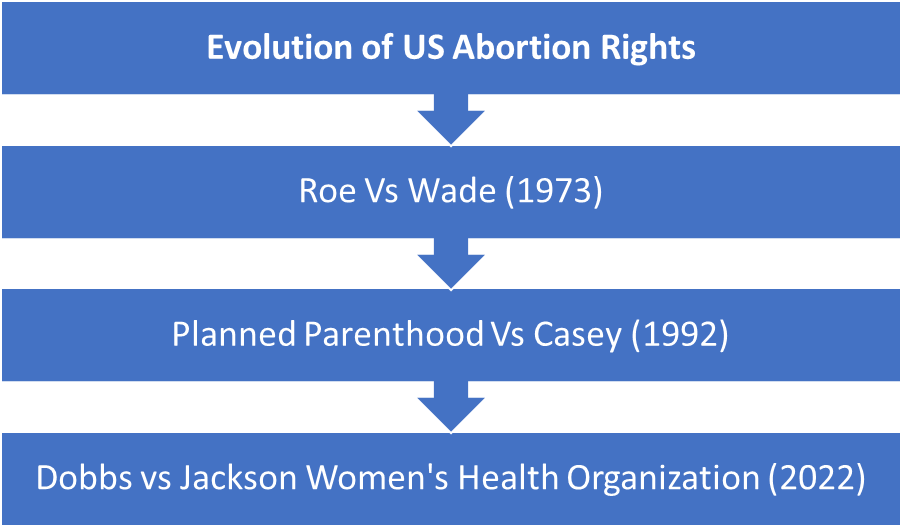
Evolution of US Abortion Rights

  • Roe Vs Wade (1973)

When Jane Roe banged on the door of the judicial system, the Country was waiting for one of the most important rulings. When the Texas Constitution took away her right to choose, Roe demanded an abortion for her third pregnancy.

Roe, however, appealed to the U.S Supreme after succeeding in the lower court. On January 22, 1973, the Supreme Court revised the Constitution by a decisive vote of 7-2. Abortion in the US has now been made lawful through the proper legal channels and under the “right to privacy.”

Numerous federal and state abortion regulations were put on hold as a result of the ruling. Absolute rights were not given, though. Women had access to the option of having an abortion up until fetal viability, or the third trimester.

  • Planned Parenthood Vs Casey (1992)

This important decision affirmed the Roe v. Wade ruling. Casey challenged the Pennsylvanian State Abortion Act, which had five regulations regarding abortion. The Supreme Court reiterated the key Roe Case finding with a 5-4 majority.

However, out of the five regulations, the Supreme Court invalidated only one, the provision requiring spouse notification. Declared to be unconstitutional. In certain situations, the court also permitted the states to establish limitations on first-trimester abortions.

In the jury discussion, the phrase “undue burden” was used frequently. Since this ruling, every situation involving abortion has been evaluated for “challenged limitations creating an undue burden on a woman’s freedom to choose.

  • Dobbs vs Jackson Women’s Health Organization (2022)

The abortion clinic of the Women Health Organization challenged the Mississippi law. They viewed Mississippi’s abortion law, which only permits abortions up to 15 weeks, as being backward and authoritative.

The Supreme Court considered the issue, engaged in extensive deliberation, and came to the most shocking conclusion. It overturned precedent and deprived American women of their fundamental right to an abortion.

Evolution of abortion laws in India

  • The Union government established the Shantilal Shah Committee to consider the legalization of abortion in the nation in the 1960s as a result of a high rate of induced abortions.
  • In 1971, the Medical Termination of Pregnancy (MTP) Act became operative. This law establishes the guidelines for how and when a medical abortion may be performed. It is an exemption to the Indian Penal Code (IPC) provisions 312 and 313.
  • A person who “voluntarily induces a woman with child to miscarry” is subject to punishment under Section 312 of the IPC, which carries a maximum three-year prison sentence, a fine, or both, unless it was done in good faith to preserve the pregnant woman’s life.
  • According to Section 313 of the IPC, a person who induces a miscarriage without the pregnant woman’s agreement, regardless of whether she is at an advanced stage of pregnancy, shall be punished with life in prison or a period of imprisonment that may last up to 10 years, as well as a fine.

Evolution of Medical Termination of Pregnancy Act from 1971 to 2021

  • The MTP Act underwent its most recent modification in 2021.
  • Before that, new regulations were put in place in 2003 to permit the use of the recently discovered abortion drug misoprostol to end a pregnancy medically up to seven weeks into it.
  • The original Act was subject to broader modifications in 2020, and the revised Act took effect in 2021.
  • Abortion is legal following a doctor’s recommendation under certain conditions, according to the Medical Termination of Pregnancy (Amendment) Act of 2021.
  • The 2021 Act expanded the maximum gestational period to which a woman may obtain a medical abortion from the 20 weeks allowed by the 1971 Act to 24 weeks.
  • Up until 20 weeks of gestation, MTP could not be accessible based only on the recommendation of a single licensed medical professional.
  • Two licensed medical professionals’ opinions are needed between 20 and 24 weeks.
  • In the earlier version of the Act, a registered doctor’s opinion was needed to obtain a medical abortion up to 12 weeks of pregnancy, and two doctors’ opinions were needed to obtain an abortion up to 20 weeks.

MTP (Amendment) Act, 2021:

  • Failure of Contraceptive Technique or Device: According to the Act, a married woman may choose to end a pregnancy up to 20 weeks early if a contraceptive method or device has failed.
  • Unmarried women: For this reason, it is also permissible for unmarried women to end a pregnancy.
  • Opinion Required for Pregnancy Termination:
  • opinion of a single Registered Medical Practitioner (RMP) about abortion of pregnancies with a gestational age of up to 20 weeks.
  • Opinions of two RMPs about the termination of pregnancies between 20 and 24 weeks. If there are significant fetal abnormalities, the State-level medical board’s approval is required before a pregnancy can be terminated after 24 weeks.
  • Increases the upper gestational limit for particular categories of women, including those who have been raped, have experienced incest, and other vulnerable women, from 20 to 24 weeks (differently abled women, minors, among others).
  • Confidentiality: Only those individuals permitted presently by effect laws may receive the “name and other particulars of a woman whose pregnancy has been terminated.”

The recent order of the Supreme Court 

  • Law applied to “unmarried” women: A 2021 update to the Act changed the phrase “spouse” to “partner,” making it clear that the law applied to unmarried women. SC so permitted abortions on women.
  • The court mandated that the AIIMS organize a medical board to determine whether it was safe to perform an abortion on the woman and to produce a report within a week.
  • An unmarried woman’s autonomy and freedom are violated when her right to safe abortion is denied. According to Article 21 of the Constitution, a woman’s right to reproductive freedom is an integral aspect of her right to personal freedom. She has a sacred right to maintain her physical integrity.

Note: 

In Justice K.S. Puttaswamy (Retd.) vs. the Union of India and Others (2017), the court acknowledged the constitutional right of women to make reproductive choices as a part of personal liberty under Article 21 of the Indian Constitution, which, despite establishing a strong body of law on reproductive rights and a woman’s right to privacy, does not result in a significant transfer of power from the doctor to the patient seeking an abortion.

Conclusion 

People can have agency and control over their bodies if they have access to safe and legal abortions. Reversing Roe v. Wade effectively means that a fetus or embryo is more important than the mother’s physical and mental well-being (and that the mother isn’t capable of making that choice for herself).

People who are residents in rural areas, and low-income individuals—who already disproportionately face hurdles to accessing quality health care—are disproportionately impacted by this racial and social justice issue. Wealthy people will merely move to states where they can access the care they need. People with lower incomes and socioeconomic levels will be compelled to have children they cannot support. As a supporter of women’s health, I hope for the day when all women, regardless of race or socioeconomic status, will have access to inexpensive, sufficient health care, which includes the freedom to have an abortion if she so chooses. When will our country fulfill the promise of “life and liberty for all”?

The ECI’s Role in Protecting and Preserving Electoral Democracy


Heart and soul of our Indian constitution i.e. preamble that declares. India to be democratic and republic. All of us who are working for protection and upholding the civil rights of the citizens of the nation are intensely connected with the democratic party of the country . Democracy is one of the basic features of the constitution as held in the famous case of INDRA GANDHI V/S RAJ NARAYAN AIR 1975 SC 2299. Political decision is the contrivance through which a cutting edge stage makes among the citizens a sense of involvement and active participation in all the public affairs. It is through the norms and ceremonies that the authority of government combined with legitimacy and peaceful deliberate change of power to the new leaders is made sure of. Purity and opportunity of political role can be guaranteed provided that the appointive administration is the basic foundation of democracy and is placed beyond the compass of party government.
ELECTION word has its one of the symbolic representations that denotes the active participation of the people to make a government for them. All the voters by voting and franchise share their will and their changing expectations from the government and the kind of ideology. Voters are the main element of democracy and free and fair elections as they are the real stakeholders they vote for after analysing which can bring better development to the country . so on the day of august 15 1947 contesting free and fair election was one of the major tasks at that time. According to article 289 of the draft constitution. Later changed to article 324 and then for setting up the independent election commission was made effective under article 4 to 9.
Election is the process of choosing a person by voting for any post or office. According to representation of the people act 1951 election to fill a seat in either of the house of parliament or state this word has been mentioned or used in part XV of the indian constitution. One of the most essential elements was free and fair election . Regular election at regular intervals and in a fair manner is a part of basic structure of the constitution as the court held in the famous case of T.N. SHESHAN V/S UOI AIR 1995 SC 852. Election commission is the guardian of the free and fair election. So before every election the election commission issues guidelines for the code of conduct of political parties and their candidates . There are various examples where violations can be observed in the code of conduct responsible for the violation for their controversial remark in the campaign of Gujarat election 2017. In LD SYSTEMS V/S CHIEF ELECTION COMMISSIONER AIR 2006 KER 229 Kerala high court held that this limitation on the freedom is to ensure the free and fair election and the commission has the power to draw force under article 324of indian constitution.
There was an important process of registration of parties initiated from 1989 even the election commission of india has restricted the use of money that cannot be done to reduce the malpractices. In a case of registered society v/s UOI , it was pointed out that , in India, elections are fought on money. The court held that purity of election is the main component of democracy and the commission can ask political parties for details of the expenditure incurred by them and for what purpose there is a bar to the court for interference in the electoral matter? But when this state came then the question arises in everyone’s mind that if the commission is a tribunal . mainly held in the case of APHL conference , shillong v/s W.A. sangama and loud speaker for campaign is valid as decided in mohinder singh v/s chief election commissioner.
Criminalisation of politics is a huge and deep problem in India. In 2003, a law was passed that stated no to elections of criminal legislative bodies . however the same issue was continued as this is a deep rooted issue. Various laws were made as a candidates need to submit their affidavit, acquittal charges pending cases etc. all the information must be clearly informed to the public . clearly stated in UOI v/s association of democratic reform that the election commission shall take all the required info and they must scrutinize it and reject it if not competent to elect the election.if any information provided is not correct then the candidate can be penalized. The concept of negative voting came into existence in the case of PUCL v/s UOI (2003) 4 SCC 399 Where people can cast the negative votes and the politicians were included under the ambit of article 19 (1)(a).
At last but not least it must be acknowledged that the election commission of India has been considered as a main responsible body for preserving and protecting the electoral democracy . Democracy as defined by abraham lincoln is completely justified only due to the constitution body like election commission that holds regular and free and fair elections and fulfills the dreams of our constitutional maker by ensuring the active participation of its citizens. Election commission can be called as a safeguard of democracy in true spirit.

THANK YOU

Say no to caste-based reservation

India is one of the largest democracies in the world. India is a country of various castes, creeds, religions, languages, etc. India is a country that believes in the concept of caste-based reservation. the system of casteism has led to various divides in society and gave rise to many clashes in society. thus the government of India has implemented reservations to uplift various communities like untouchables, Harijans, etc.. so while discussing about this topic a question arises in everyone’s mind Is this beneficial for society? does this system lead to more clashes and division in society? Or is the income-based reservation is better opinion or not? reservation should be there in education institutions or not?

History

so we can trace the genesis of caste-based reservation in India from 1882 when William hunter and Jyoti Rao phuler in 1882 came up with the idea of caste based reservation system. texts like manusmriti talk about fixing jobs by birth based on their caste. the system of reservation i.e truly prevented in today’s society was introduced in 1933 when British PM Ramsay Macdonald presented the ‘ communal award’. A proper representation was awarded to Muslims, Sikhs, Indian Christian, anglo Indians Europeans. That award was opposed by many eminent personalities but mahatma Gandhi opposed this award by fasting unto death to express his randcore to this award but meanwhile this award got immense support from B.R Ambedkar. after a lot of negotiations, this was to decide that there would be a single Hindu electorate with some reservation in it. this was referred to as a Poona pact and after this Poona pact Gandhi Ji called off his fast.

Many more traces can be seen as far back in the history of pre-independence India when princely states of Travancore there was a caste-based reservation in a govt job and all other one is 1902 kholapur 50% reservation was given to backword communities in the service so the demand no only just raised before the Poona pact but has many more instances in history. In the era of post-independence initial reservations were provided only for SCs and STs. OBC was included in the reservation on the recommendation of the Mandal commission.

Note: In article 340 of the Indian constitution, the president appointed a backward class commission under B.P Mandal. The main aim of this commission was to determine the criteria of socially and educationally backward classes and to recommend the steps to be taken.

The Mandal commission concluded that there are a total of 52% of OBCs and they must be given 27 % reservation in govt jobs. mandal commission gave 11 indicators of social, educational, and economical backwardness. It has generated all Indian other backward classes (OBC) list of 3743 castes and a more underprivileged ” depressed backward classes” list of 2018 castes.

Here we came up with another study of the Indra Sawhney case of 1992, Supreme court while upholding the 27% quota for backward classes, struck down the government notification reserving 10 % of government jobs for economically backward classes among the higher caste. the supreme court upheld in the same judgment that reservations should not exceed 50 % of the Indian population.

a new concept of creamy layer came to the limelight i.e the reservation is only part of the appointment is should not excede to promotions. 103 rd constitutional amendment, 2019 has provided 10 % reservation in the government jobs and in an educational institutions for the ‘ economically backward ‘ in the unreserved category.

Necessities of reservation.

This system was introduced to fulfill all the atrocities faced by the backward class in the pre-independent era. this was made to give them equal opportunities and ensure the concept of equity. this provision ensures a proper representation of the backward classes in the state services.

general view on the policy of caste-based reservation

Are you living in caste free nation? No, it may not prevent physically but the political scenarios have taken a wide place and widened the gap between the reserved and the unreserved category. phrases like ‘ unity in diversity ‘ can no longer be applicable. this phrase was to give a new beginning to all the people who suffered in the pre-independence area, but thanks to our political leaders and parties to keep this system countinue by renewing it all the time lead to widening the divide. reservation is something that brings a division and feeling of enmity among the people of society. reservation was brought by our constitution makers to avoid the caste divide in the society but today it is the only motion and a reason that casteism is still prevalent in Indian society. It was made to ensure the concept of equity & lessen the economic divide and give proper opportunities. reservation is one of the biggest enemies of meritocracy. It has just become a medium to meet their political ends through aduce language loyalties and primordialism.

the true fact is that the policy of reservation has mainly benefitted the elite people in the backward class as the true marginalized in the backward class are still in the worst conditions. Initially, the reservation was intended for only SC / ST communists that too for a period of 10 years.(1951-1961). but it has just extended over time. even after more than 70 years of independence reservation has just increased. In the 93 rd constitutional amendment, the government of India allowed making special provisions for the advancement of any socially or economically backward class even in the admission procedure in aided or unaided private institutions. this was aggressively opposed by the students as it reduce the seats for their admission & the other loophole to this provision is that other than reserved seats OBC candidates can get admissions on the seat of the general category. this happens in almost all the competitive exams and deemed universities. students of the general category get a huge cut-off to qualify to get admission but the students of the reserved category get a comparatively very low cut-off to get admissions. so this is one of the major drawbacks to this system as this discourages an unreserved category to do hard work and lowers their confidence. (Article 15 (4) , Article 16 (2) , Article 16 (4) ) .

In the famous case of Balaji vs the state of Mysore court held that the caste of a person cannot be a criterion for their backwardness. No caste that was backward remained backward always. government should review it list after some period.

In my opinion, there is no backwardness through caste. a myth of society is that backward caste student is not able to get admission in a good institution for education and the stream of their choice but upper caste could get, but caste was never a barrier, economic factors are one of the major points that can not be ignored at any cost. so many times upper class poor are not able to get addmission in institutions due to economic backwardness.

Way forward

so here we go with another ironic fact that the term backwardness is not even defined not even anywhere in the constitution how there can be a reservation for an entity that is not even defined?

In my view, the reservation must be taken as affirmative action to ensure proper equity in society for all privileged people nevertheless of caste. our government for the past year is turning this socio-economic issue into just a game of dirty vote bank politics for their pride and power.

A fact to give look upon this policy just ensure education at the higher institution but did not ensure the promotion of education at a primary level. Many of the children in the country lack schooling at the primary level. many instances can be found that teachers in government schools did not provide a proper education module rather than giving the student some task at school to do. so here the first question to this is to upgrade the system of education. government schools must ensure quality education. according to me if you are developing the human resource of a nation is the only this to reduce the socio-economic disparities in society. Reservation is truly a curse in society that create a divide and the cause of wars within the society. Eventually, the government should find the list by filtering truly economically deprived people and providing them justice. a short conclusion to this is that there must be a strong will to crucially provide proper management between justice for backward, equity for forwards, and efficiency for the entire system.

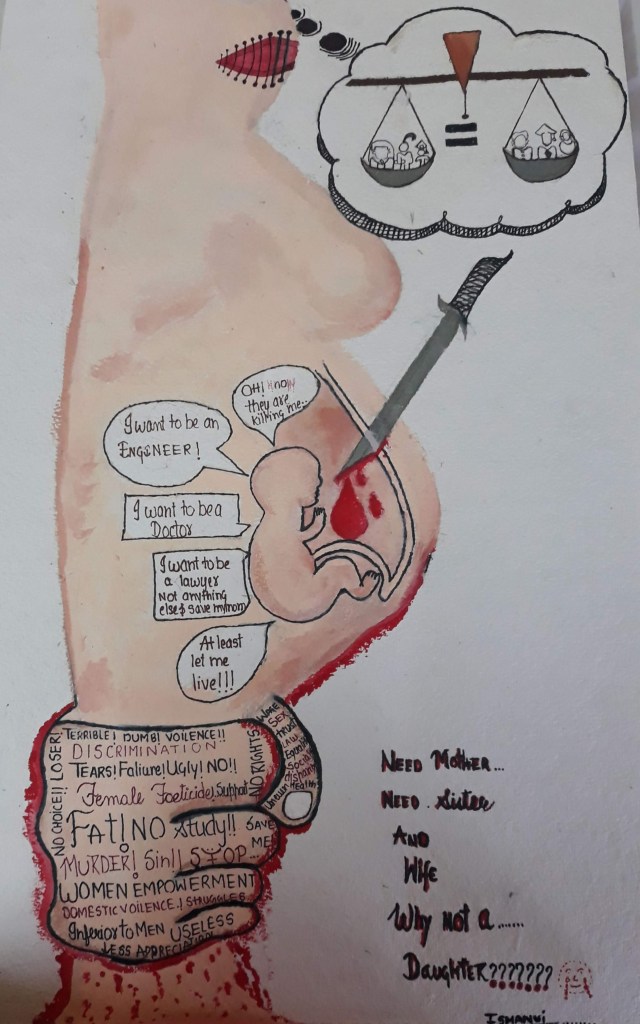
A CURSE OF SOCIETY , THE FEMALE FOETICIDE

” NEED A MOTHER,
               NEED SISTER & WIFE,
           WHY NOT A DAUGHTER ?”

Before beginning with the concept of “what is female foeticide?” some questions arise that those people with insane mentality practice this evil ever wondered what the world would be like without a girl or woman? actually, there won’t be an existence of any world without women. if one needs a mother to get existence in the world and for all the love and care. everyone wishes to have a sister to play with and to always celebrate the famous festival of Raksha Bandhan and a wife to get married and to help the one in their journey of life than the question arises why not a daughter? why kill her even before birth?
FEMALE FOETICIDE refers to the sex-selective abortion of a child mainly when people find that the fetus is a girl child they try to abort the fetus to avoid giving birth to a girl child. In other words, we can say that the intentional killing of a girl’s child before her birth. this is one of the worst kinds of violence against a woman where a girl is refused to have their basic fundamental rights i.e ARTICLE 21 OF INDIAN CONSTITUTION ” that guarantees the person’s Right to life and human dignity. it consists of all the aspects of one’s life i.e to make one’s life meaningful, complete, and worth living. it is one of the most heinous crimes against women on this planet.

Female foeticide genesis can be traced to the 1990s with the establishment of ultrasound technology. In India, this technology arrived in 1979. the gender of the fetus is determined through ultrasound waves and leads to the termination of the female fetus in the womb of the mother if it is a girl all because of their greed to have a male child.
                   

There is the various reason why this curse is prevalent in society? there are various obsolete ideas prevalent in the society as primitive people consider girls as a burden on them as they need to bear all their expenses of her at the time of marriage. this male-dominated society always shows a cultural bias against women. so they consider providing education to the girls as not much worthful. their security is considered another important responsibility to their families. the huge amount of dowry is also one of the biggest responsibilities and a reason to avoid a girl child .increased cases of rape, and sexual harassment even with minor girls became a reason for not having a girl child. There is a faith that girls are always consumers and boys are the only producer.

Thus Parents feel that their son will earn money for their whole life and care for them and be a support system in their old age however girls will get married a day and will have a separate family and will not be with them as a support in their old age. the son can provide fame to the family if a daughter does anything they will provide all fame to their in-laws. Illiteracy is the other reason for this evil in society. declining moral and ethical standards. hence women are considered as weaker sex as compared to men and they are considered physically less strong than men. gender discrimination can be observed in all aspects of society. there are many more reasons for female foeticide in society.

 There is a terrible impact of female foeticide in society. as this result in a low sex ratio. this led to an increase in more crimes against women like human trafficking for sex work and marriage, buying of brides from other states or countries, lewd remarks against women, sexual abuse, teasing, etc. various steps are taken by the government of India to stop this evil in society.
indian constitution provides everyone the right to life and give a special mention in the national policy of children 1974, national education policy 1986,(to reduce gender gap ), PCPNDT act1994, and various program like Beti Bachao Beti padhao , sukanya samridhi yojana, and states like Haryana have schemes like “apki beti hamari beti” and act like POCSO( prevention of child from sexual offenses), etc . scholarship schemes like Pragati. reservation of seats for women in panchayat and non-gazzeted posts even in parliament, 100 women initiative based on role models by the ministry of women and child welfare.
Moreover, there should be proper implementation of all the acts and laws. there should be a proper check on these laws. there should be a program to influence and change the mindset of the people towards a girl child and tell them the importance of a girl as there would be no existence of this world without women. permanent cancellation of one’s license who determine the sex of the fetus, parents must be punished for aborting a girl child, awareness campaign must be done.

Last but not least I end up with an observation that the future girl will be your child and the past can be your mother or a sister. if u need a mother or a sister then your future generation must also need a sister or mother so please raise a girl just don’t kill her female foeticide is more like a crime. if we did not stop it there will be a drastic impact of this that in coming years there will be a scarcity of brides and very less girls will be found around. as the youth of this nation let us take an oath to bring awareness to teach this society a worth of a girl or women in a society that she is an equivalent human like them and has a right of life with dignity.


               THANK YOU

Rape

"Blame rapists for rape, Not women"

mental trauma faced by a victim

Rape is a type of sexual assault usually involving sexual intercourse or other forms of sexual penetration carried out against a person without his/her consent. The act may be carried out by physical force, coercion, abuse of authority, or against a person who is incapable of giving valid consent, such as one who is unconscious, incapacitated, has an intellectual disability, or is below the legal age of consent.
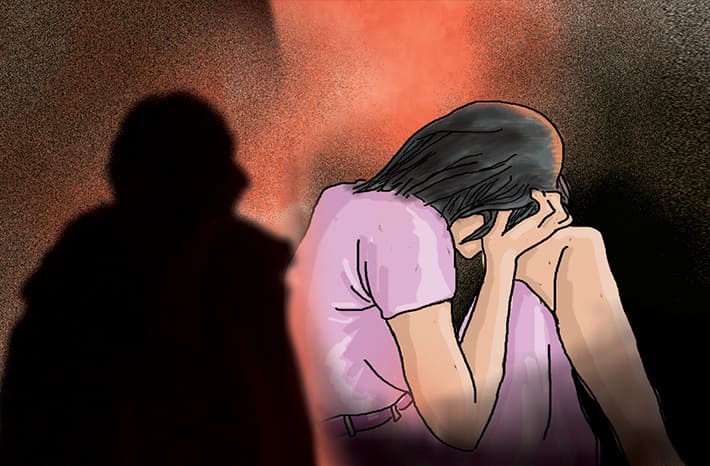
Rape, as an atrocity is the most un-excusable crime found in humanity. Rape is one of the curses in society. It is to my mind more dangerous than murder. When you murder a woman, she is gone and does not experience humiliation after death. But a rape victim leads a life of continuous and unbelievable suffering and mental agony. she faces a lot of mental atrocities simultaneously with the physical assault. she is considered outcasted in society with a lot of social hatred in the society without her fault. she losses all her self-confidence and self-esteem. she is even not accepted by her family.
does she did a crime? if not, then why outcast her from society? How many males would like to marry a rape victim on their sweet will? A rape victim is at no fault for her rape so why she is going through all the mental trauma? she suffers hatred and is an outcast all her life for the crime that she did not commit. this leaves a lifetime of scars and an impact on her life. after this other people consider her as an object rather than a human. Rape outrages a woman’s modesty. After a rape incident, a woman lives a pathetic life which includes fear, depression, guilt complex, suicidal action, and social stigma. The post-rape trauma is harrowing and pathetic for the victim.
Nowadays in many cases rape is being legalized through marriage. The person who raped her is asked by the villagers or society or even by the courts with the consent of the victim to marry the rape victim. Though it is a type of adjustment, it does not give justice to the woman raped because she is being forced to marry a criminal as she is left with no option and under family and society pressure and for her entire life the woman is reminded that her husband is a rapist, he is a criminal and hence she is full of hatred for him.
No man is allowed to sexually assault a woman based on her behavior and on the mode of her dressing. as the kids or the minor girl who are not even able to speak give consent through their clothes. so society must remove the myth that girls should not wear this or that. no clothes invite men for sex.
Every parent fears sending their daughter alone at night as they do not want their daughter to be another daughter of India like NIRBHAYA. this is one of the biggest failures as a democratic nation and as a society. as a responsible part of society every parent must teach their son that woman is not an object she is a human being like him and have a right to be treated equally. all parents must inform their son if anyone’s daughter is not safe because of him outside then he must stay at home. it must be made aware that if they do such a crime their family will boycott and will be reporting against them. all boys must be educated and must be taught that they must carry this as their responsibility and that all the girls must feel safe around them . as youth we must come together to bring a positive attitude to society.
The government has announced the punishment of death for rapists. but besides this, they must bring more rules of providing a therapist to a victim to let her forget the past and overcome society’s hatred.
These are the registered cases with the police. But the actual numbers of rape are much more because most of the rape cases are not registered with the police clue to social stigma and fear for the victims. Not only laws and government can do to make it a safe nation. But being a part of this society everyone should take it as their own responsibility that no one should feel unsafe around u . this crime does not restrict only to girls some cases of boys being raped and some animals are reported. let us learn our duties to remove this curse from society and make this nation a safe nation for everyone.
Indian refer to their earth as a motherland or dharti maa. it is sad to part that we can’t provide safety to the daughters of our nation. last but not least I will conclude with my point of view that India can be rape free if everyone consider every girl as their sister and provide them the basic safety they will provide their sisters and daughters. everyone must start treating girls as human beings like them, not as an object.

“RAPE IS THE ONLY CRIME IN WHICH VICTIM
TURN OUT TO BE ACCUSED “

THANK YOU